
MOTS-c Peptide: Benefits, Dosage, Side Effects, and What to Expect
Both categories of peptide are studied in relation to metabolic regulation, glucose handling, and energy balance — which is the practical basis for grouping them in a shared research category — but a researcher should not assume that findings, assay protocols, or handling considerations transfer directly from one class to the other. Third (comparative panels help researchers build a more complete picture of how the mitochondrion), as a genetic and signaling unit, communicates with the rest of the cell — a research question that is inherently comparative rather than single-molecule in scope. Readers interested in this broader mitochondrial-signaling research landscape may find it useful to review Royal Peptide Labs’ dedicated overview of mitochondrial peptides and cellular energy research, which situates MOTS-c alongside other compounds studied for their role in mitochondrial function.
Certificates of analysis showing purity (mass spectrometry confirmation), and sterility testing provide basic quality assurance. The peptide vendor guide and testing laboratory guide cover evaluation criteria. MOTS-c from reputable sources with third-party testing provides much greater confidence than products of unknown origin. For those already taking metformin, adding MOTS-c would introduce unknown interactions and duplicated mechanisms. Both compounds improve insulin sensitivity and have longevity research interest.
Clinicians should not present MOTS-c benefits to patients as proven, and should be candid about the wide gap between preliminary laboratory findings and clinical proof. The most discussed potential applications of MOTS-c cluster around metabolism and energy. A responsible clinical summary is that MOTS-c has shown biologically interesting metabolic signaling in early research, and that how, or whether — this matters clinically in humans remains an open question. Unlike most peptides discussed in clinical settings, its coding sequence is found within mitochondrial DNA, specifically the 12S rRNA region — rather than in the cell’s nuclear genome. It has been studied mainly in cells and animals for a possible role in metabolic regulation.
Research published in Cell Metabolism by Lee et al. (2015) identified this regulation as central to the molecule’s metabolic actions, distinguishing it mechanistically from other known exercise mimetics. Ensuring proper subcutaneous depth, using appropriate needle gauge, and allowing alcohol prep to dry before injection addresses common causes. Sourcing from reputable suppliers with third-party testing documentation reduces this concern.
The One Human Trial

Researchers examining the clinical and translational research landscape surrounding MOTS-c can find a dynamically updated view of registered studies through ClinicalTrials.gov search results, as linked in the references section below. This ongoing resource is more reliable than any static summary, given the evolving activity of registered trials in this domain.
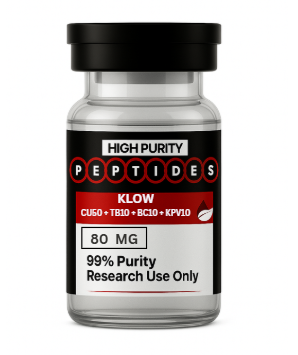
In comparison to hormones that have been studied for a long time and classical signaling peptides, MOTS-c is indeed a relatively novel addition to the identified peptide landscape. Although its research literature is currently active and expanding, it is still significantly smaller than that of well-established metabolic peptides. To apply a finding to a more complex model system (such as a different cell type), a whole-organism model, or an alternate stress paradigm, direct confirmation within that specific system is essential; extrapolation should never be assumed. This necessity is the reason comparative and multi-model research designs are frequently encountered in the current MOTS-c literature. Among researchers who are new to the field of MOTS-c and mitochondrial-derived peptides, several recurring questions and misconceptions frequently arise.
Decrease in Inflammation
Repair-focused peptides such as BPC-157 and TB-500 are studied primarily for tissue healing and recovery, acting mainly on local repair processes and angiogenesis. However (the absence of reported harm in mice is not the same as demonstrated safety in humans), especially over the long term or at supraphysiologic doses. The peptide has a relatively short circulating half-life — which is a common challenge for small peptides and a reason researchers study modified analogs and delivery strategies. Anyone considering peptides in a fitness context should first consult a healthcare professional and review our discussion of peptide stacking for a balanced view of combining compounds. These results are promising within their experimental context, but they should not be mistaken for evidence of clinical benefit in people.
A single bout of moderate-intensity aerobic exercise produces a measurable spike in circulating MOTS-c within 30 minutes, which may partly explain why regular physical activity preserves insulin sensitivity and metabolic flexibility over decades. A 2019 study found that centenarians (people living past 100), had significantly higher circulating MOTS-c levels than age-matched controls who died earlier, suggesting the peptide may be a marker of, or contributor to, exceptional longevity . The same mechanisms, at different dose intensities and in different physiological contexts, produce the distinct outcomes that make separate dosing protocols clinically meaningful. This is why early commentary described MOTS-c as an “exercise mimetic,” a term that captures the mechanism even if it overstates the clinical equivalence. Circulating MOTS-c levels decline with age and are lower in people with type 2 diabetes and obesity, a pattern that has motivated both animal and early human research into exogenous supplementation. When researchers at the University of Southern California discovered it was producing a functional peptide (the finding reframed the mitochondria not merely as the cell’s power plant but as an endocrine organ), secreting signals that coordinate whole-body metabolism.

None of the combinations discussed here are recommendations, they are educational context for a clinician-led decision. The comparison matrix below outlines how MOTS-c differs from peptides it is commonly paired with, it is educational, not a recommendation to combine them. In practice, patients and providers often look for changes over a 4–8 week window, energy, workout capacity, recovery, and metabolic lab markers. Because AMPK signaling is heightened in the fasted state, MOTS-c is commonly taken before eating in the morning. Subcutaneous MOTS-c is typically drawn and injected with a small-gauge, short insulin needle — commonly around 29–31 gauge and 5/16 to 1/2 inch (8–13 mm) long. It is a reasonable hypothesis (not an established effect in people), and human trials looking at obesity, glucose control and aging markers are still early.
Circulating levels decline with age in both humans and animal models. The mitochondrial specificity of MOTS-c makes it mechanistically complementary to compounds acting through other pathways. In research contexts, some studies have shown potentially synergistic effects when used together, though this remains an area of ongoing investigation. Exercise provides mechanical stimuli (cardiovascular training), and psychological benefits that pharmacological compounds cannot provide.
Exercise Capacity and Endurance (Animal Data)
Royal Peptide Labs documents MOTS-c with the same lot-specific certificate of analysis standard applied across its catalog, available via the MOTS-c 10mg product page — alongside broader company-level quality-testing and certification documentation maintained across its catalog. A supplier that maintains the same documentation rigor for a specialized mitochondrial-derived peptide as for its highest-volume products is a meaningfully stronger signal of overall quality-control culture than a supplier that only documents its best-selling compounds thoroughly. Broader detail on the company’s testing methodology (including third-party verification practices), is maintained as part of Royal Peptide Labs’ standing quality-testing documentation. Royal Peptide Labs maintains lot-specific documentation on its certificate of analysis page, and researchers should always confirm that the COA they are reviewing corresponds to the specific lot number printed on the vial in hand — not a generic or historical COA for the compound in general. Researchers wanting a deeper technical comparison of these two methods — including their respective strengths and limitations for peptide verification generally, can consult the HPLC vs mass spectrometry peptide testing guide. 5-Amino-1MQ is a small-molecule research compound studied for its activity as an inhibitor of NNMT (nicotinamide N-methyltransferase), an enzyme involved in cellular methylation and NAD+ metabolism.

The initial encouraging findings originate from a sponsor report concerning CB4211 — rather than a definitive study on the efficacy or long-term safety of native MOTS-c. Although the registry indicates completion in April 2021 (no results have been posted; the completion alone on this page does not serve as proof of safety), nor does it transfer the findings of an analog to native MOTS-c. Different mouse experiments investigated physical performance through intraperitoneal administration.
For performance-focused applications, pre-exercise timing leverages MOTS-c’s exercise mimetic properties to enhance training adaptations. Morning dosing in a fasted state represents the most common timing approach for MOTS-c. Avoid extended heat exposure or repeated temperature cycling that accelerates degradation. Higher concentration reduces injection volumes but requires more precise measurement for smaller doses. While flat doses dominate clinical trials, weight-based adjustments may optimize individual protocols.
Grasping the Basics of MOTS-c
Pre-workout MOTS-c pairs naturally with post-workout recovery peptides like BPC-157. Spacing doses by 1-2 hours ensures distinct absorption and signaling phases. Those already using metformin for metabolic conditions should coordinate MOTS-c use with healthcare providers. Non-peptide compounds may enhance MOTS-c effects through related mechanisms. MOTS-c may be combined with other peptides or compounds to address multiple goals simultaneously or enhance specific outcomes.